ON A SUSTAINABLE JOURNEY
A sustainable logistics chain requires the commitment of all stakeholders and a shared understanding of the direction in which we are heading. Tommi Leikkari, Group Vice President, Supply Chain at Atria Finland, explains what sustainability actions mean from a logistics perspective.Step 1 - Plant and storage
Waste management and forecasting
“Waste management and effective sales planning are key sustainability measures that can improve the sustainability of storage. At Atria, this means close collaboration and proactive planning with our customers.”
Energy efficiency and solar energy
“Atria has a large solar power field in Nurmo that produces about 8 per cent of all the energy used by the plant. Solar energy production peaks in the summer, which allows greater energy efficiency in cooling the production facilities.”
Occupational safety and training
“Occupational safety is an essential part of corporate responsibility. For example, Atria logistics has achieved an accident-free streak of more than 800 days, thanks in part to regular safety walks, appropriate physical arrangements and thorough orientation.”
Automation and recyclable transport units
“Automation has improved the efficiency of internal logistics and reduced forklift traffic. Recyclable transport units are widely utilised.”
Step 2 - Transport
Load efficiency and automation
“Automated warehouses enable more efficient loading of transport units, which improves truck load factors and reduces environmental impact.”
Introduction of biogas
"The new biogas plant in Nurmo will begin production this year. This is a significant step towards improved sustainability in logistics and makes it possible to refuel trucks right next to the plant. Atria aims to make a switch to biogas on a large scale, which could reduce truck emissions by up to 95 per cent."
Emissions monitoring and guidance for driving habits
“Atria’s partner transport companies monitor emissions and driving habits. Atria organises training programmes to improve energy efficiency and monitors operations through feedback.”
Step 3 - Retail and wholesalers
Waste management in stores
“Our cooperation with stores is close, especially in the area of waste management. Interaction is especially important during peak seasons, such as Christmas or Midsummer.”
Recyclable packaging materials
“Atria uses recyclable transport boxes. We’re currently developing new recyclable materials, which will reduce the need for disposable packaging.”
Regular meetings and goals
“We regularly set annual sustainability goals with our larger customers, which help us develop and evaluate our sustainability actions.”
Step 4 - Consumer
Safe products for consumers
“Atria is committed to clean energy and a wide range of sustainability measures, which are visible to consumers as recyclable packaging, for example. In addition, regulatory oversight and Atria’s logistics processes – such as ensuring the integrity of the cold chain – guarantee product safety for consumers. Atria also calculates its carbon footprint, which enables the communication of the environmental impact of its products to consumers.”
Published on 26 June 2026.
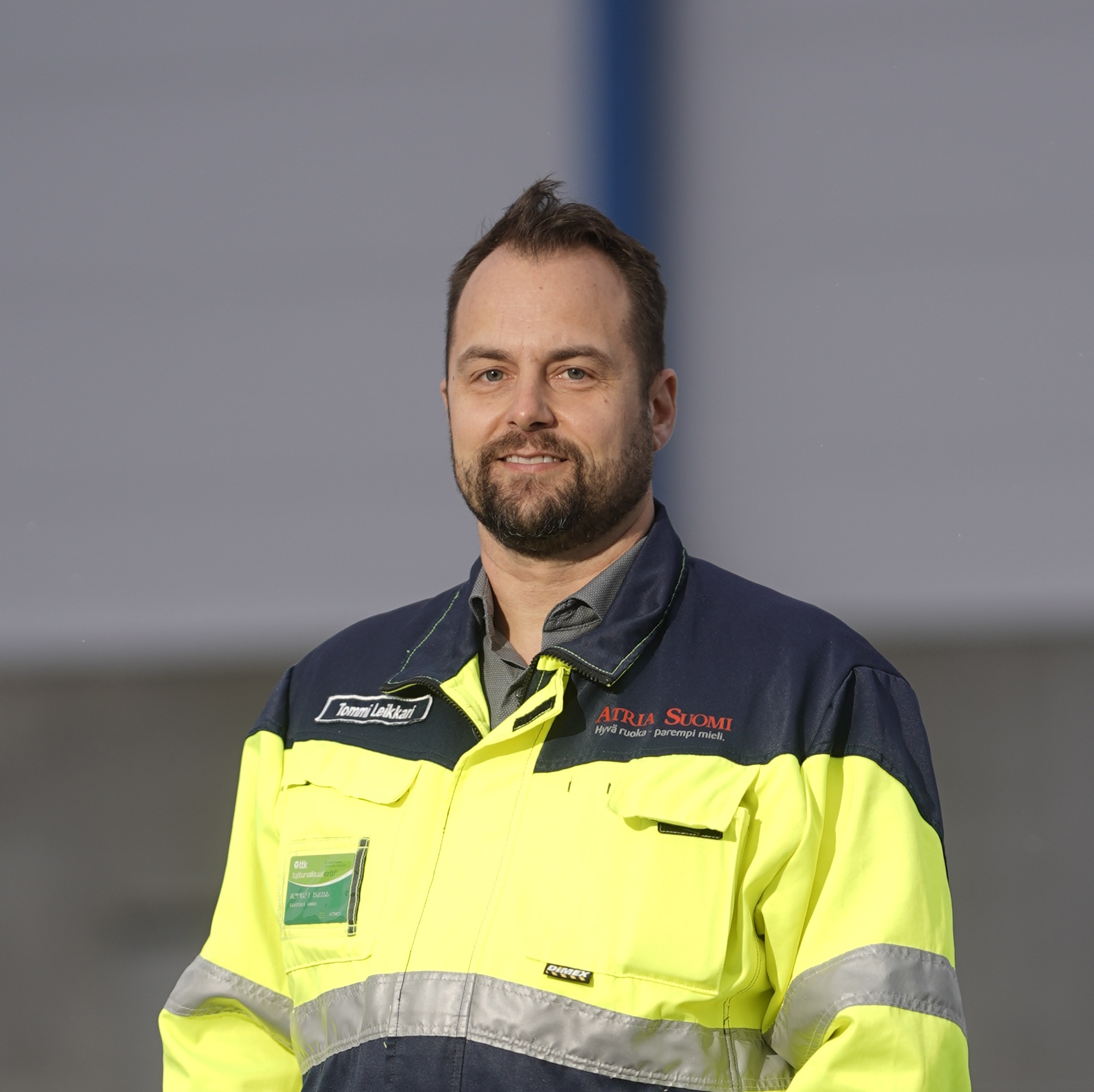 |
Tommi Leikkari,Group Vice President, Supply chain, Atria Finland |
|
“No single company can achieve its sustainability goals on its own. Achieving the objectives requires that everyone involved understands the entire value chain and the areas that should be focused on to improve sustainability. From a logistics perspective, sustainable development initiatives require extensive collaboration with transport companies and customers, among others.” |